Dezan Shira & Associates
Suite 1803-1805, Tian An Centre
338 West Nanjing Road
Shanghai 200003
上海市南京西路338号天安中心1803-1805室
邮编:200003
Download Map
Tel: +86 21 6358 8686
Fax: +86 21 6358 9899
Regional Director: Richard Cant
E-mail: shanghai@dezshira.com
Population: 18.58 million.
Nearest Ports: Shanghai is Mainland China’s largest port
International Airport: Yes, well-connected to most major Asian, European, and US destinations.
2007 GDP: US$171.4 billion.
Notable Foreign Investors: Volkswagon, Volvo, Dell, IBM, Siemens, Bayer, DHL.
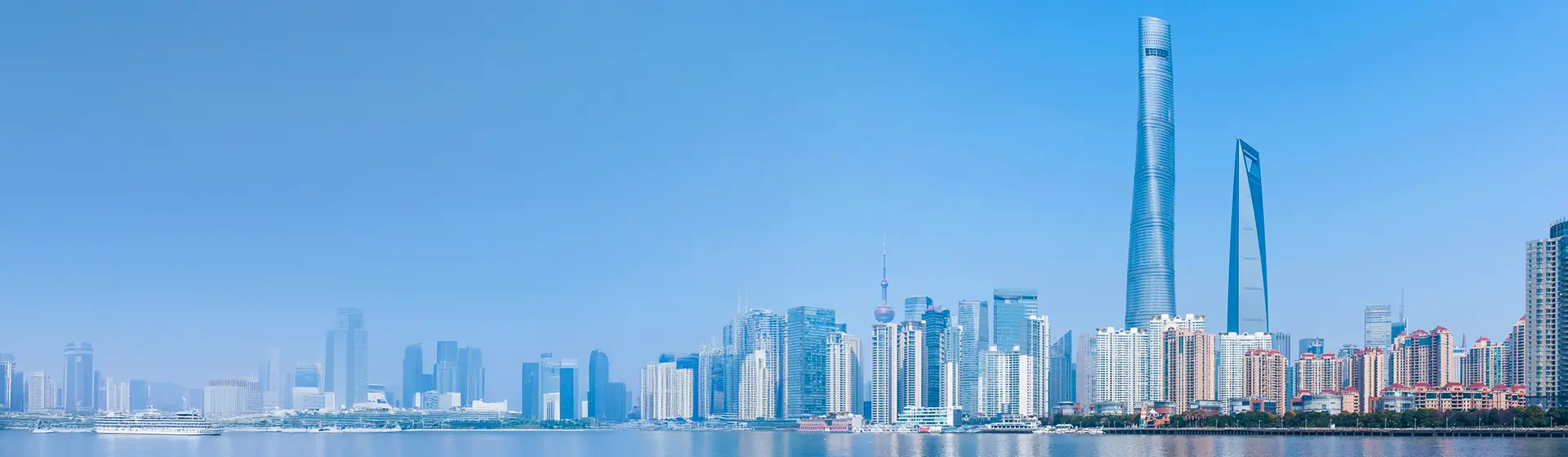
Description: Shanghai is mainland China's most comprehensive industrial and commercial city, ranking first in population and population density. As the most westernized city in China after Hong Kong, Shanghai is on the cutting edge of China's race for modernization. Almost a quarter of the world's construction cranes stand in this city of 18 million. An international metropolis which has witnessed breathtaking economic development over the last fifteen years and shows no signs of slowing down, it is China’s largest commercial and industrial city as well as popular tourist destination. It is the home to the mainland’s primary stock exchange and is the main financial center for raising domestic finance, as well as being the main service center for the neighbouring manufacturing provinces of Jiangsu and Zhejiang.
Weather : Winter: Cool, low -5℃; Summer: Humid, high +35℃
Fast Facts
An international metropolis that has witnessed breathtaking economic development over the last 15 years, Shanghai shows no signs of slowing down. Moreover, the 2010 World Expo brought a massive upgrade to the city’s infrastructure with US$2.7 billion spent on infrastructure development. The city now has a more expansive subway system, larger international airports, and improved international ports with larger handling capacity. The city is administratively equal to a province and is divided into 19 county-level divisions. To the north and south are Jiangsu and Zhejiang provinces, while the East China Sea lies to the east, Hangzhou Bay to the south, and the Yangtze River to the north.
Partially to reduce population density, Shanghai will focus on developing seven new satellite cities and developing links with neighboring cities in the Yangtze River Delta as key goals in the city’s 12th Five-Year Plan (2011-2015). The seven new cities, including Lingang New City in Pudong New Area, Qingpu New City, and Jinshan New City, will be developed to be the main industrial bases for advanced manufacturing, emerging industries, and the modern services industry, according to the Plan. The Songjiang New City, the biggest among the seven new satellite cities with an area of 120 sq km, is planning to have as many as 1.1 million residents by 2020.
Infrastructure
Shanghai's transportation infrastructure is constantly pressed to keep up with the city's ever expanding urban population.
Road
Shanghai has six elevated roads, including two ring roads and eighteen expressways. The two main areas, Pudong and Puxi, are linked both by bridges and underground tunnels. There are six national expressways that connect Shanghai to Beijing and the surrounding region, with plans for an extension to connect Chongming Island to the city center. The recent rise in disposable income means more and more people own cars, especially after the government banned cycling on many main roads in order to ease congestion. The number of cars in the city is limited to the amount of number plates available at public auction.
Shanghai is also home to the world’s largest bus system, with over 1,000 different bus lines.
Railways
The world’s first commercial Maglev railway was opened in Shanghai in 2003. It connects Pudong International Airport with the Longyang Road metro station (also in Pudong) in less than eight minutes and reaches a maximum speed of 433 kilometers per hour. Two major railway lines intersect in the city: the Jinghu railway (connecting Shanghai with Beijing) and the Hu Hang railway (running to Hangzhou). Both of these routes are currently being developed for high-speed travel, although another Maglev railway from Shanghai to Hangzhou has been canceled due to the project’s expense.
Shanghai is also famed for its massive metro system, which transports an average 4.7 million people per day. As of 2011, there are eleven metro lines (excluding the Shanghai Maglev Train) and over 434 kilometers of track in operation, making it the longest network in the world. The ultimate aim is to have 20 routes by 2020.
Air
Shanghai has two airports: Hongqiao International and Pudong International. The latter is the fourth busiest airport in China following Beijing Capital, Hong Kong Chek Lap Kok, and Guangzhou Baiyun.
Ports and waterways
It only took Shanghai five years to double its cargo handling capacity from 200 to 400 million tons and in terms of container handling; it is currently ranked second after Singapore.
“Shanghai Port” is actually an amalgamation of three sites: Wusong Port, Waigaoqiao Port, and Yangshan Deepwater Port. Wusong Port is the oldest of the group but was surpassed by Waigaoqiao Port and the more recently constructed Yangshan Deepwater Port, which handles approximately 35 percent of Shanghai Port’s total container throughput (2010).
Yangshan Port is located south of Shanghai in Hangzhou Bay and allows depths up to 15 meters. When fully completed in 2012, Yangshan Port will have four phases in operation with 30 berths capable of handling 15 million TEUs annually.
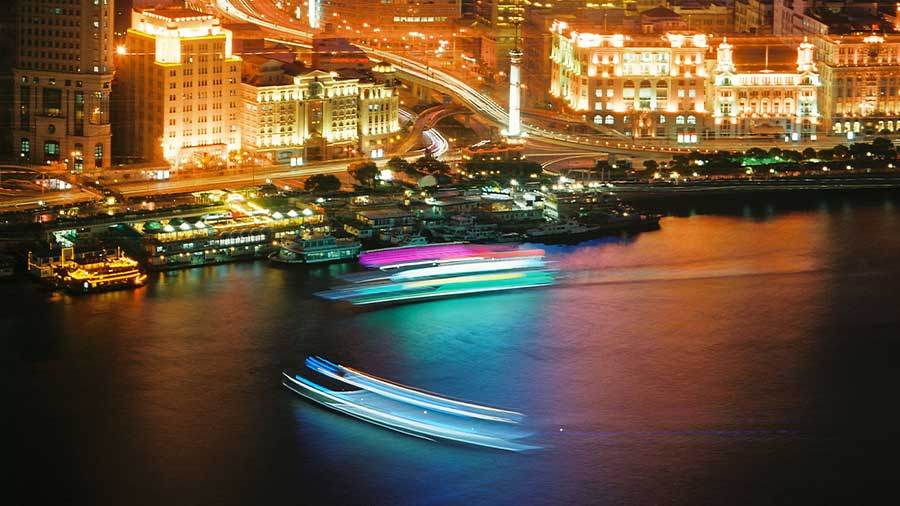
Despite the addition of Yangshan Port, the throughput of Waigaoqiao Port also continues to rise, and it remains a large hub for inter-Asia shipping routes. The older Wusong Port, located on the north end of the Bund, handles primarily domestic container service. The area around the port has most recently been slated for redevelopment to serve cruise liners and possibly yachts.
Economy and investment climate
Shanghai is China’s largest and greatest commercial and industrial city. With only 0.1 percent of the land area of the country, it supplies over 12 percent of municipal revenue and handles more than a quarter of total trade passing through China’s ports. In 2010, Shanghai’s GDP reached RMB1.687 trillion and per capita GDP was RMB73,294. Exports reached US$180 billion, an increase of 27.4 percent, while imports amounted to US$188 billion in 2010. Now the city wants to develop itself as a mainland financial center rivaling Hong Kong and London, although this ambition is hampered by regulatory issues.
The Shanghai Economic Committee has recently cited the manufacturing industry as the key driving force for economic development in Shanghai. The committee has also prioritized the expansion of the modern service industry and the advanced manufacturing industry with the goal of turning Shanghai into one of the four major central business districts by 2020.
In recent years, the Chinese government has stepped up its efforts to move China’s economy up the value chain from a low cost production base, to an innovation-oriented economy and has taken various measures to encourage foreign investors to set up R&D facilities in China. In terms of tax incentives, Shanghai’s Pudong New District benefits from a tax reform designed for the local services sector. In another example, integrated circuit design companies in Shanghai Zhangjiang Hi-Tech Park are currently able to benefit from the “refund upon collection” tax arrangement.
Shanghai Stock Exchange
The Shanghai Stock Exchange was founded in 1990 and is the largest stock market on the mainland. In terms of market capitalization, it ranks fifth in the world. There are three main categories of securities listed on the Shanghai Stock Exchange: stocks, bonds, and funds. Bonds traded on the exchange include treasury bonds, corporate bonds, and convertible corporate bonds. The Shanghai Stock Exchange issues two types of stocks: A shares (priced in RMB) and B shares (priced in USD). A shares have historically only been available to domestic investors, while B shares were available for both foreign and domestic investors. Since 2002, however, foreign investors have been able, with limitations, to trade A shares under the Qualified Foreign Institutional Investor system. The exchange plans to eventually merge the two types of shares.
Shanghai also plays host to the Shanghai Futures Exchange. The Shanghai Futures Exchange began operations in May 1999 and was an amalgamation of three exchanges: the Shanghai Metal Exchange, the Shanghai Commodity Exchange, and the Shanghai Cereals and Oils Exchange. Contracts are traded for copper, aluminum, zinc, gold, natural rubber, and fuel oil.
Retail
As one of the first few sectors opened to foreign investment after China’s WTO accession, the retail sector has witnessed booming growth. More than half of the world’s top 50 retailers have entered the market with most of them having stores in Beijing, Shanghai, and other coastal cities.
Total revenue for Shanghai’s retail industry reached RMB603.7 billion in 2010, with year on year growth of 17.5 percent. Many retailers use Shanghai as an entry point and gateway before moving into other mainland retail markets. Shanghai’s mature retail environment and comprehensive municipal infrastructure make it an ideal place to launch a retail enterprise or introduce a brand to China. The 2010 Shanghai World Expo brought a new burst of retail development and generated RMB4.5 billion in the Expo site alone.
Resources
Government Organizations
Shanghai Government Website: www.shanghai.gov.cn
.