Your Trusted Partner for Business Success
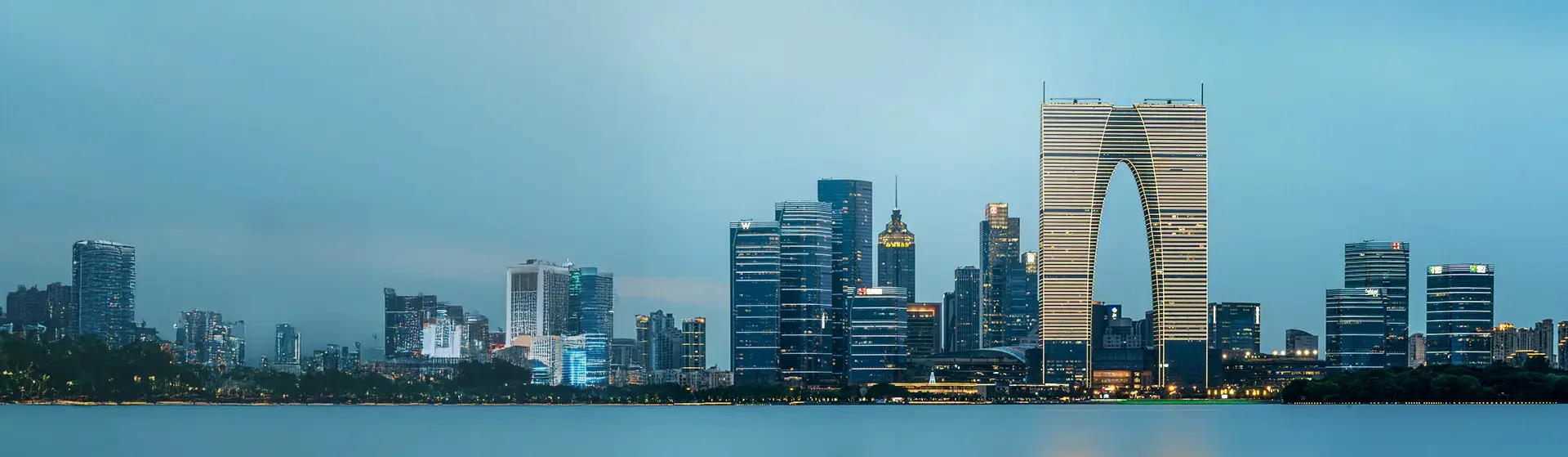
Dezan Shira & Associates opened its Suzhou office in 2012 to support foreign-invested enterprises in one of China’s top locations for advanced manufacturing and high-tech development. Suzhou’s proximity to Shanghai and strong infrastructure make it a preferred base for production, R&D, and operational hubs. We assist clients with entity structuring, HR and tax advisory, and ongoing regulatory compliance, particularly in Suzhou’s economic and industrial parks. Our team delivers location-specific guidance while coordinating with our broader East China network to help companies scale efficiently and compliantly across the region.
Regional Contact

Our Location
Dezan Shira & Associates (Suzhou) Ltd.
Room 2260, 22F, Modern Media Plaza, No. 265 East Suzhou Road
SIP, Suzhou,
Jiangsu
China
215000
协力管理咨询(苏州)有限公司
中国江苏省苏州市苏州工业园区苏州大道东265号22楼2260室
邮编: 215000


How We Can Help
Our Suzhou team provides end-to-end support for foreign companies navigating the local market—whether you are entering for the first time or scaling existing operations.
Backed by multidisciplinary expertise, we deliver integrated solutions across corporate establishment, compliance, advisory, and growth planning. With deep local knowledge and a regional outlook, we help businesses operate confidently and competitively in Suzhou’s complex, fast-evolving regulatory landscape.
Case Studies and Insights







Contact Our Experts






Our Other Locations in China
Suite EF06, East Tower, Twin Towers B-12, Jian Guo Men Wai Avenue Beijing, China 100022
Room 1401, Tower B, No. 555, Huangpu Road Qixianling, High Tech District Dalian Liaoning Province China 116085
Unit 2608, West Tower, IGC Tianying Plaza No. 222 Xingmin Road, Tianhe District Guangzhou Guangdong Province China 510623
Floor 15, West Lake International Trade Plaza 1 West Lake Avenue Shangcheng District, Hangzhou Zhejiang Province China 310009
Room 24-1-16, Building 003, No.3, 5 and 6, Century Oriental Commercial Plaza, 1083 East Zhongshan Road, Yinzhou District, Ningbo City, Zhejiang Province China 315040
Room 1216, 12th Floor, Zhonggang Building, 16 Fuzhou South Road Shinan District Qingdao Shandong Province China 266071
Suite 1109-1112, World Trade Tower, No.500 Guangdong Road Huangpu District Shanghai China 200003
Dezan Shira & Associates Shenzhen Unit 01-02, 34/F Hon Kwok Center Building 3031 Shennan Middle Road Futian District, Shenzhen 518033, Guangdong Province, P.R. China
Room 2260, 22F, Modern Media Plaza, No. 265 East Suzhou Road, SIP, Suzhou, Jiangsu, China 215000
Dezan Shira & Associates Tianjin Room 33, 41F Tianjin World Financial Centre No. 2 Dagubei Road Heping District Tianjin China - 300022
Room 1117, Unit7, Floor 11, Lihe Business Center, the second of No.16, Zhongshan 3rd Road, East District, Zhongshan Guangdong Province China 528400
Dezan Shira & Associates Haikou Room C3022, Floor 3, Fuxing City, New Bund, No. 32, Binhai Avenue, Longhua District, Haikou City, Hainan Province China 570105
See MoreMore About Our Suzhou Business
To support companies investing and operating in Asia, Dezan Shira & Associates provides expert advisory and corporate services, backed by over 30 years of experience. Through our integrated platform of specialists, thought leaders, and local teams, we deliver market intelligence, strategic insight, and hands-on support across Suzhou.

Our Clients
Since 1992, Dezan Shira & Associates has grown from a small consulting practice to a trusted partner for multinationals, SMEs, and entrepreneurs navigating Asia’s business environment.

Careers
Our team reflects the diversity and drive behind our success in Suzhou. We offer opportunities to grow professionally in a cross-border, multi-disciplinary advisory environment.

Company news
Stay informed with the latest company updates, milestones, media coverage, and regional developments from our Suzhou practice.

We provide expert advisory and corporate services across Asia, guiding businesses through complex markets and regulations.