Hangzhou Office

Accountants in Hangzhou - Hangzhou accountant
Our business advisors, tax experts and accountants in Hangzhou can help you with any questions related to establishing or conducting your business in China. To talk to a Hangzhou Accountant or business consultant, please contact us today
 

Dezan Shira & Associates
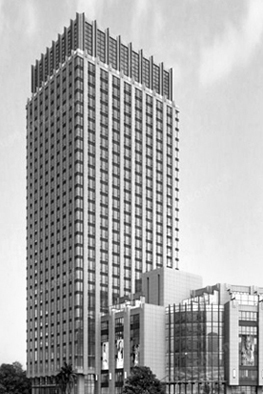
Suite 1001, Xuefeng Mansion
346 Qingtai Street, Hangzhou 310009

杭州清泰街346号雪峰大厦1001室
邮编:310009

Tel:+86 0571 5685 9956
Fax:+86 0571 5685 9957
Manager: Helen Ye
Contact: hangzhou@dezshira.com
 

City Snapshot - Hangzhou

Population: 6.4 million.

Nearest Port: Beilun Port, Ningbo (ninety minutes by car).

International Airport: Yes, principally serving Korea, Japan, and Hong Kong.

2007 GDP: US$58.6 billion.

Notable Foreign Investors: Bosch, ZF, Saint Gobain, Air Liquide.

Description: Hangzhou is the political, economic and cultural center of Zhejiang province, rapidly emerging as one of the most prominent cities in China, both in as a business environment and a tourist destination. In 2005, it was rated by Forbes Magazine as having the best business environment in China not only due to its 15 percent annual GDP growth rate, but also due to its combination of living standards, infrastructure and business-friendly regulations. From its strategic location in the central Yangtze River Delta, Hangzhou has become one of the wealthiest cities in China, and is now building a strong reputation in information technology, software development, telecommunications equipment and electronics. It is also the heart of the silk textiles industry; the technique for silk processing was originally invented here.

Weather: Winters: Cool, +5; Summer: warm, balmy, high +30℃.


Fast Facts

  1. Hangzhou's economy has kept a double-digit growth rate for more than 15 years.
  2. As a regional economic center, Hangzhou accounts for nearly a quarter of the economic output of Zhejiang Province, China’s wealthiest province.
  3. The Hangzhou Urban Economic Circle, a joint initiative for economic development between four cities in Zhejiang Province, that was approved in 2011 will dramatically improve transportation infrastructure in the region.
  4. Established in 1993, Hangzhou Economic Development Area regularly ranks in the top 10 development zones for investment environment.

Hangzhou is 150 kilometers from Shanghai and at the southern end of the 1,794 kilometer-long Grand Canal that connects it to Beijing.
Forbes Magazine rated the city as having the best business environment in China (2010) thanks in large part to its high annual GDP growth rate and its combination of high living standards, well-developed infrastructure and business friendly regulations.

While Hangzhou’s silk industry is (arguably) the best in China, the city has also made a name for itself in information technology, software development, telecommunications equipment and the electronics industry. Local investors attribute their choice of Hangzhou to various factors including lower office set up costs than Shanghai or Beijing, competitive government tax incentives and a strong network of local IT companies.

Infrastructure
The blueprint for the Hangzhou Urban Economic Circle, a major regional economic development project, was approved in 2011 as a joint initiative between four cities in Zhejiang Province (Hangzhou, Huzhou, Jiaxing, Shaoxing). The plan prioritizes transportation infrastructure improvements, including new public bus lines, a trans-city express railway system, and a restructuring plan for the Grand Canal to facilitate waste transportation.

Road
An extensive network of expressways have reduced the driving time to Shanghai to two hours, and all the major cities in the Yangtze River Delta are no further than a four to five hour drive. Following the completion of the Shanghai-Hangzhou-Ningbo expressway, Zhejiang province is also pushing ahead with the construction of a Hangzhou-Jinhu-Quzhou, and Hangzhou-Wenzhou expressway.
The Hangzhou Bay Bridge, the world's longest sea bridge, is a 37-kilometer trans-oceanic bridge linking Ningbo's Cixi County in the south to Jiaxing in the north. The bridge, which has six lanes and a designed lifespan of 100 years, opened to public transport in May 2008 and has shortened the distance between Shanghai and the port city of Ningbo by 120 kilometers.

Railways
Hangzhou is an important rail transportation hub of East China. Shanghai-Hangzhou, Zhejiang-Jiangxi, Xiaoshan-Ningbo and Xuanchen-Hangzhou railways intersect here.

Air
Hangzhou’s Xiaoshan International Airport has more than 90 international passenger and freight airlines every week flying to East Asia countries like Japan, South Korea, Hong Kong and Singapore – all in all, a boon for businesspeople who used to have to fly via Shanghai. There are also direct flights to Taiwan, India and Ethiopia.

Ports and waterways
Shanghai and Ningbo’s seaports can be reached in around one and a half to two hours. The Beijing–Hangzhou Grand Canal and the Qiantang River are also in close proximity.

City infrastructure
Hangzhou is currently constructing its metro system and is expected to be completed by 2012.

A local power company, Zhejiang Electric Power, has warned that the province may suffer from major power shortages in 2010-2012. Partially driven by power shortages, Zhejiang province as a whole, Hangzhou included, is shaping policy to encourage companies to undertake high value added activities. For example, for 44 heavy power-using industries throughout Zhejiang province, the government is imposing additional fee RMB0.10 to RMB0.30 cost per kilowatt hour of electricity consumed above set limits, as of June 2011.

Economy and investment climate
In 2010, Hangzhou realized a GDP of RMB594.6 billion with a GDP per capita rising to RMB86,281. The city has a good investment and business environment and is particularly attractive for the high-tech and advanced manufacturing industries.

Hangzhou's industries have traditionally been textile, silk and machinery, but electronics, food processing and other light industries have also been developing rapidly since 1992. Wahaha, the nation's largest beverage company is headquartered in the city. Geely, a Chinese carmaker that made headlines in 2010 for its acquisition of the US carmaker, Ford, has its headquarters in Hangzhou.

Although the city does not attract heavy industry, it is home to a growing light manufacturing sector which focuses on textiles and small machinery. Almost all of the microelectronics and mobile-telecommunications industries are centralized in this district. Major IT and electronics companies such as IBM, Toshiba and Siemens have set up business in Hangzhou’s development zones.

In 2010, the scale of foreign capital utilization continued to expand in Hangzhou. Altogether 599 contracted projects with direct foreign investment were approved during the year for a total foreign capital of US$7.71 billion in contracts, up 10.7 percent over the previous year, and actual foreign investment of US$4.356 billion, up 8.5 percent over the previous year.

For companies investing in Hangzhou, there is a solid educational system and an abundance of human resources. There are six higher education districts in the city and 37 higher educational institutions such as Zhejiang University. The Xiasha High Education Park located in the Hangzhou Economic and Technology Development Area covers an area of 10.91 square kilometers and includes 15 higher education colleges. Some of the key subjects include electronic information engineering, computer science and technology, and manufacturing and automation.

Resources
Government Organizations
Hangzhou Government Website: http://eng.hangzhou.gov.cn/

Online Resource Library Login


Upcoming Events


Events RSS Feed

View all Events

Our Business Library

The Dezan Shira & Associates online resources library is the essential guide for doing business in Asia. The library provides in-depth resources ranging from the analysis of the regulatory environment

Access the Library


Asia Briefing Media China Briefing India Briefing Vietnam Briefing Russia Briefing Mongolia Briefing www.2point6billion.com