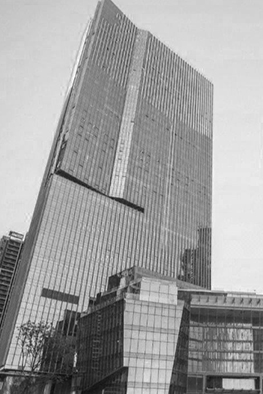
Guangzhou Office

Accountants in Guangzhou, Guangzhou Accountants
Our business advisors, tax experts and accountants in Guangzhou can help you with any questions related to establishing or conducting your business in China. To talk to a Guangzhou Accountant or business consultant, please contact us today
 

Dezan Shira & Associates
Suite 1005, 10/F, Tower B, Center Plaza
161 Linhexi Road, Tianhe District
Guangzhou 510620
PR China
广州市天河区林和西路161号 中泰国际广场B塔1005单元
邮编:510620

Tel: +86-20-3825 1725
Fax: +86-20-3825 1367
Manager: Rosario Di Maggio
Contact: Guangzhou@dezshira.com

City Snapshot - Guangzhou

Population: 10.2 million

Nearest Ports: Nansha is Guangzhou’s resident port and has daily ferries from Nansha to Hong Kong as well as massive cargo facilities.

International Airport: Yes, mainly servicing Southeast Asia.

2007 GDP: US$100.7 billion

Notable Foreign Investors: P&G, Siemens, Fedex, Peugeot, Shell

Description: The capital of Guangdong province and one of the largest cities in China, Guangzhou, is the transportation, industrial, financial, and trade center of Southern China. It is also a major deepwater port on the Pearl River Delta, a special economic development zone and an important trading point with Hong Kong. It posses a higher GDP per capita than residents of Shanghai and is the largest manufacturing base in the country. 90% of global toy production is from this area. It is also home to China’s largest Commodities Fair – the biannual Canton Trade Show, held since 1949, and also the largest LPG terminal in the country.

Weather: Winter Cool, +5 low, Summer: +35 high, humid

Fast Facts

  1. Ranked first on the list of 2010 Forbes Best Commercial Cities in China’s Mainland.
  2. Three pillar industries – automobile manufacturing, electronic communications and petrochemicals – account for about 30 percent of Guangzhou’s total industrial production value.
  3. By the end of the 11th Five-Year Plan, 174 Fortune 500 companies and 411 FDI enterprises had been set up in Guangzhou.

Capital of Guangdong province and one of the largest cities in China, Guangzhou is the transportation, industrial, financial and trade center of southern China. The city is also a special economic development zone and an important trading point with Hong Kong.
Furthermore, the city boasts an impressive infrastructure for trade, with the fourth largest port in China (seventh largest in the world) by cargo. During the 12th Five-Year Plan, an additional RMB20 billion is to be spent on further port development.

Infrastructure
Over the last few years, the Guangzhou government has invested a lot of money into the city’s infrastructure. New highway networks have been constructed in the region and now travel time to most major cities in the area has been reduced.

Road
Numerous expressways in Guangzhou are currently undergoing construction. Those that have been finished and officially opened in 2010 include the Guangzhou-Dongxin Expressway (connecting Guangzhou to Foshan and Nasha Port), the Guangzhou-Zhuhai Expressway, a portion of the Beijing-Macao Expressway (connecting Guangzhou with the west bank of the Pearl River) and the Guangzhou-Wuzhou Expressway (connecting Guangdong province with Guangxi province). The second Guangzhou-Shenzhen Expressway is expected to open by the end of 2012.
The Rapid Bus Transport System (RBT), operating since February 2010, has received the 2011 International Sustainable Transportation Award. The system has the highest number of passengers boarding and highest bus frequency of any such system in the nation. It is also directly connected to the metro system.
Guangzhou also has a very good network of long distance buses connecting to most major cities in Guangdong and other provinces.

Railways
Guangzhou now has four railway stations. Guangzhou Central Station provides services to other provinces. Guangzhou East Railway Station serves as a main hub for connections to Shenzhen and Hong Kong. Guangzhou North Railway Station is a small station which mainly operated bullet train services between Guangzhou and Wuhan beginning in 2009. The bullet train service was transferred to the Guangzhou South Railway Station in 2010, which is currently the biggest station in the city.
The Guangzhou-Shenzen-Hong Kong High-Speed Railway, Guangzhou-Foshan Railway and Guangzhou-Maoming Railway will start operating at the Guangzhou South Station in the future. The Guangzhou-Shenzhen section of the Guangzhou-Shenzhen-Hong Kong route is expected to begin operations in August 2011. The travel time between Guangzhou and Shenzhen is expected to take only 36 minutes. Extension to Hong Kong is scheduled to be completed by 2016. Other major high speed projects include the Guangzhou-Nanning route, which should be in operation by 2013.

Air
The Guangzhou Baiyun Airport is one of the major airports in Guangdong province, located 28 kilometers from the city center and 41 kilometers away from the Guangzhou Economic and Technological Development District. The airport operates services to more than 120 international and 90 domestic destinations. In 2011, services to New Zealand, Saudi Arabia and India were added. According to the 12th Five-Year Plan, passenger volume through the airport is expected to reach 65 million and cargo and mail volume is expected to reach 2 million tons by 2015.
There are five airports in the Pearl River Delta region within a three-hour drive of Guangzhou, including Chek Lap Kok in Hong Kong.

Ports and waterways
Guangzhou Port, centrally located in the Pearl River Delta, is China’s fourth largest and the world’s seventh largest port by cargo traffic and China’s third largest and the world’s fourth largest port by container throughput (2010). In 2010, Guangzhou port handled 425 million tons of cargo, recording year on year growth of 13.33 percent and 12.7 million TEUs. By the year 2020, Guangzhou Port is expecting greater cargo volumes, amounting to 600 million tons, with container throughput of 25 million TEUs. Guangzhou port is connected with more than 100 domestic ports in China and more than 350 international ports in over 80 countries and regions. It has four operation zones at Nansha Port, Huangpu Port, Xinsha Port and Inner Port. It is equipped with 720 berths, including 673 berths for productive purposes. About 70 percent of the external trade handled by the Guangzhou port is transshipped or re-exported via Hong Kong.

City Infrastructure
Guangzhou was the fourth province in China to build an underground railway system. There are currently eight lines in operation. The northern extension to the metro line 3 connecting Guangzhou East Railway station to the Baiyun Airport began operation in October 2010. The Guangzhou-Foshan line also began operation in December 2010. During the period of the 12th Five-Year Plan, three additional lines covering 312.6 kilometers will be constructed, and the total operational distance is expected to exceed 600 kilometers by 2020. A light rail network will eventually connect Guangzhou with the major cities in the PRD at a planned total length of 717 kilometers.

Economy and investment climate
Guangzhou is the economic center of the Pearl River Delta. In 2010, Guangzhou’s GDP amounted to RMB1.06 trillion. Its total import and export value reached US$100 billion and was ranked among China’s six largest foreign trade cities. The total amount of foreign direct invest­ment in the city reached US$51.17 billion, while utilized foreign investment for 2010 amounted to US$3.98 billion, a 5.4 percent increase from the previous year. Approximately 980 FDI companies were newly approved in 2010, a 16.1 percent increase year on year.

Initially, Guangzhou’s economy was focused on light industry, processing and services. Now it is undergoing a transition into an international city with a balance between heavy and light in­dustries, a vibrant service sector and constantly increasing core competitiveness. Furthermore, it is now officially recognized as the Comprehensive National High-tech Industry Base with the high-tech industry set as a pillar industry. 

In 2010, the Asian Games brought numerous changes to the city’s image and significantly im­proved the investment climate. Positive changes can be found in areas such as urban development, infrastructure, and more widely in the transpor­tation system and the real estate market. A total of RMB122.6 billion was invested in the 16th Asian Games. The local government invested about RMB109 billion in infrastructure from 2005 to 2010.

Resources
Government organizations
Guangzhou Government Website: www.gzcity.gov.cn

Online Resource Library Login


Upcoming Events


Events RSS Feed

View all Events

Our Business Library

The Dezan Shira & Associates online resources library is the essential guide for doing business in Asia. The library provides in-depth resources ranging from the analysis of the regulatory environment

Access the Library


Asia Briefing Media China Briefing India Briefing Vietnam Briefing Russia Briefing Mongolia Briefing www.2point6billion.com